Transformer tanks are among the most critical structural components of electrical transformers. Although they are often perceived as simple steel enclosures, they play a vital role in protecting internal transformer components, maintaining insulation, dissipating heat, and ensuring reliable long-term operation.
Whether installed in power transmission networks, renewable energy plants, industrial facilities, or electrical substations, a properly engineered transformer tank directly affects transformer performance, operational safety, and service life.
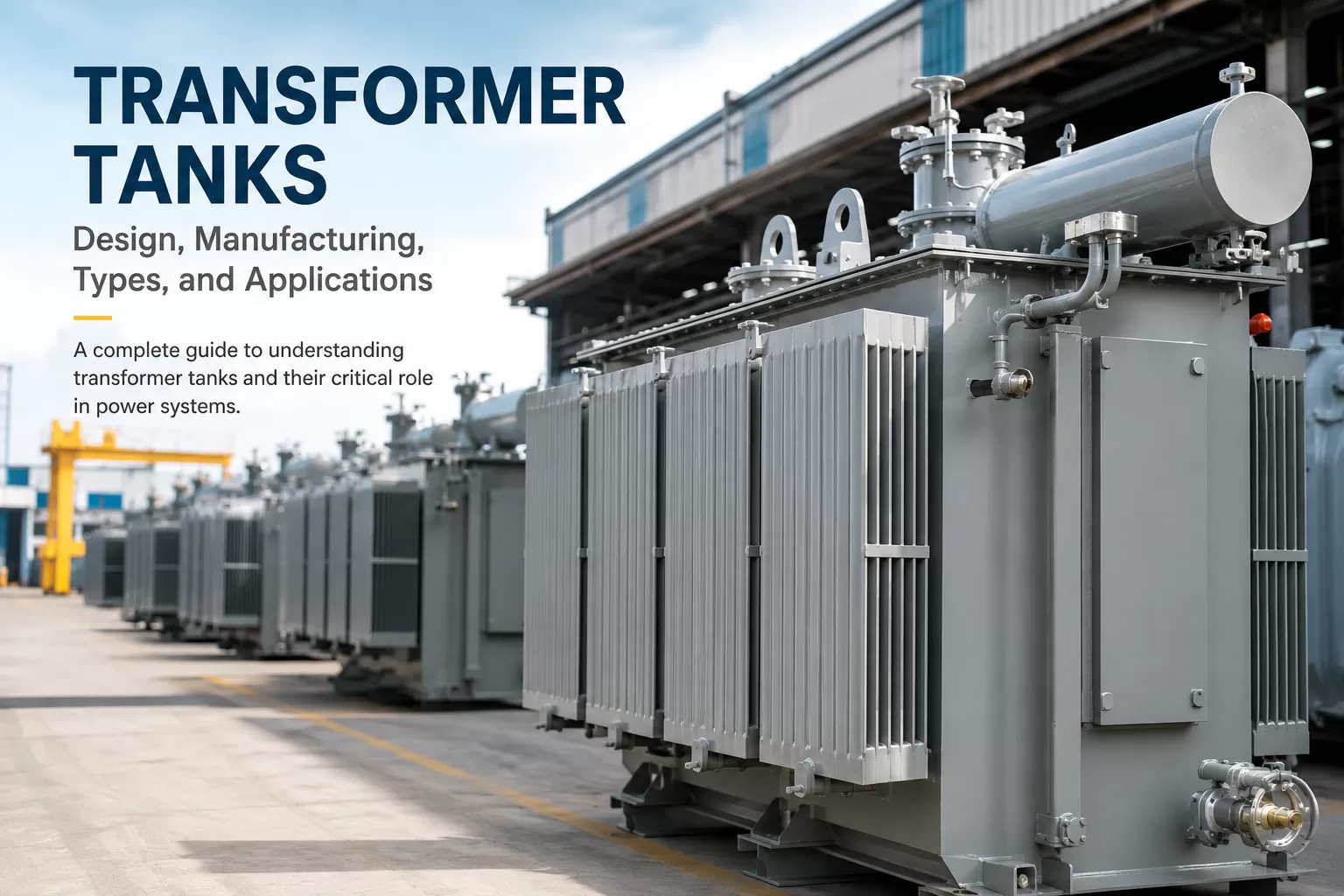
This guide explains the functions, materials, types, manufacturing stages, applications, and key selection criteria of transformer tanks.
What Are Transformer Tanks?
Transformer tanks are heavy-duty steel enclosures designed to house and protect the core, windings, insulating oil, and auxiliary components of power and distribution transformers.
Their function extends far beyond structural support. A transformer tank also forms an essential part of the transformer’s cooling, insulation, and environmental protection systems.
A well-designed transformer tank helps to:
- Protect internal components against mechanical damage
- Contain transformer insulating oil safely
- Dissipate heat generated during operation
- Prevent moisture, dust, and contaminants from entering the transformer
- Extend transformer service life
- Improve operational reliability and safety
Even a high-quality transformer cannot operate reliably over the long term without a properly engineered and manufactured tank.
Why Are Transformer Tanks Important?
Transformer tanks significantly influence the reliability, safety, efficiency, and service life of power and distribution transformers.
Mechanical Protection
During transportation, installation, and operation, transformers may be exposed to various mechanical forces. The tank protects internal components against:
- Mechanical impacts
- Transportation stresses
- Vibrations
- Wind loads
- External pressure
- Seismic activity
- Harsh environmental conditions
Its rigid steel structure helps prevent deformation and protects sensitive electrical components.
Oil Containment
Most power and distribution transformers use mineral oil or ester-based insulating fluids. The transformer tank safely contains this insulating liquid while helping prevent leakage and contamination.
Transformer oil performs several critical functions:
- Electrical insulation
- Heat transfer
- Arc suppression
- Moisture protection
- Cooling of the windings and core
An oil-tight transformer tank is essential for reliable transformer operation and environmental protection.
Efficient Cooling
Electrical losses inside the transformer generate heat during operation. If this heat is not removed efficiently, insulation materials can deteriorate, reducing transformer life expectancy.
Transformer tanks may work together with:
- Cooling radiators
- Corrugated cooling panels
- Cooling fins
- Oil circulation systems
- Natural air cooling systems
- Forced-air cooling systems
Effective thermal management supports operational reliability and helps reduce maintenance requirements.
Environmental Protection
Transformer tanks are designed to operate under a wide variety of environmental conditions, including:
- Rain and snow
- UV radiation
- Humidity
- Dust
- Industrial pollution
- Corrosive environments
- Temperature fluctuations
High-performance surface preparation and coating systems improve corrosion resistance and extend service life.
Types of Transformer Tanks
Different transformer applications require different tank designs. The most common transformer tank types include hermetically sealed, conservator, and corrugated tanks.
Hermetically Sealed Transformer Tanks
Hermetically sealed transformer tanks isolate the insulating oil from the atmosphere, helping reduce oxidation and moisture ingress.
Key advantages include:
- Minimal maintenance requirements
- Longer transformer oil life
- Reduced oxidation
- Improved insulation performance
- Protection against moisture ingress
These tanks are commonly used in distribution transformer applications.
Conservator Transformer Tanks
Conservator transformer systems use an external expansion vessel to compensate for oil-volume changes caused by temperature variations.
Key benefits include:
- Suitability for large power transformers
- Controlled thermal expansion
- Accessible oil monitoring and maintenance
- Long-term operational reliability
- Effective oil preservation
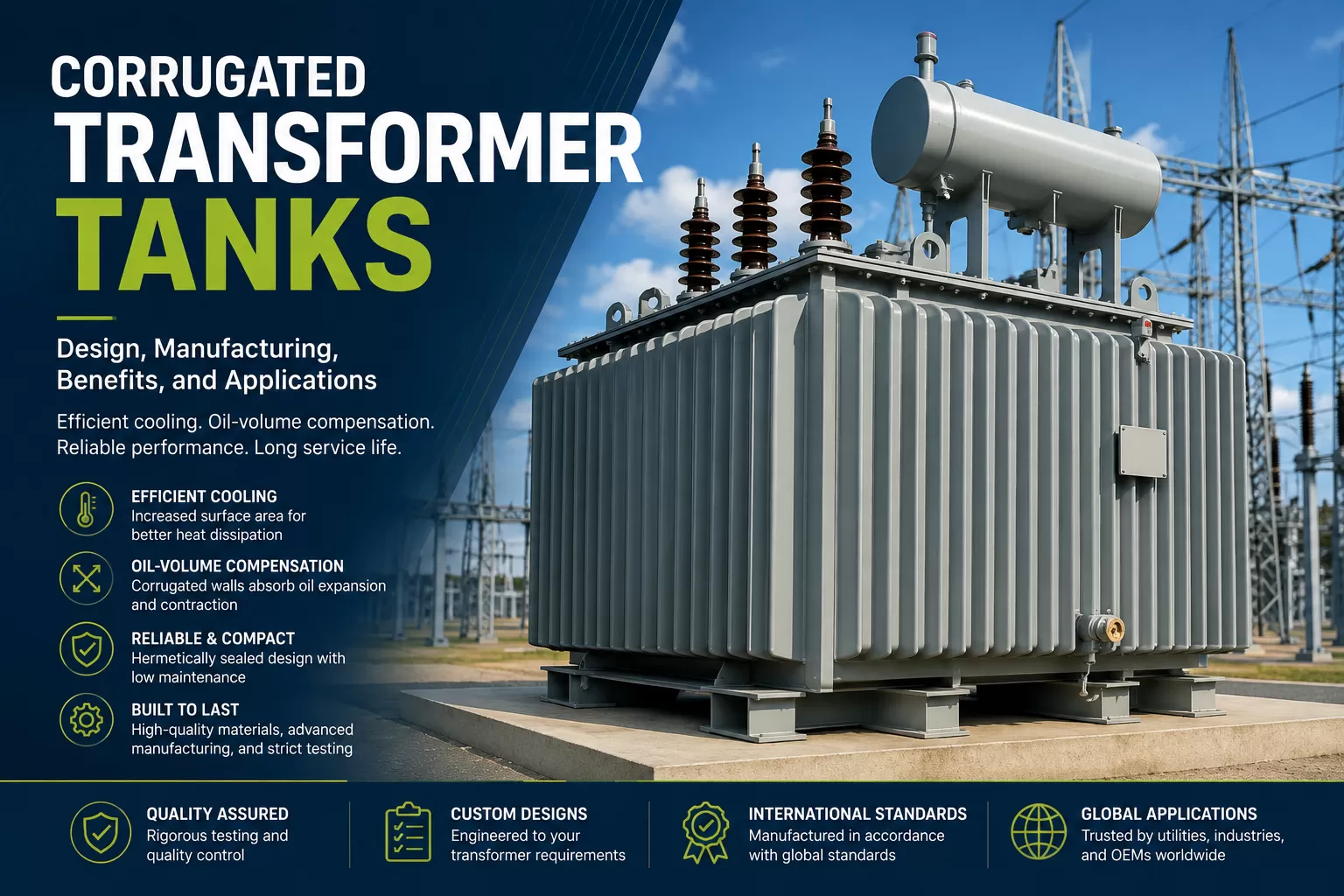
Corrugated Transformer Tanks
Corrugated transformer tanks use flexible steel panels that expand and contract as the volume of the insulating oil changes.
Key advantages include:
- Compact construction
- Effective natural cooling
- Reduced need for separate radiators in suitable designs
- Efficient use of installation space
- Suitability for distribution transformers
Materials Used in Transformer Tanks
The structural strength, corrosion resistance, and service life of a transformer tank depend heavily on the materials used during manufacturing.
Common material options include:
- Carbon steel
- Low-alloy steel
- Stainless steel for specialized applications
- Galvanized steel
- Corrosion-resistant coated steel
Material selection depends on:
- Transformer rating
- Installation environment
- Climate conditions
- Corrosion exposure
- Customer specifications
- Applicable technical standards
Selecting the appropriate steel grade and coating system improves structural durability and long-term reliability.
Transformer Tank Design Considerations
Transformer tank engineering requires structural analysis, dimensional accuracy, and careful evaluation of operating and transportation conditions.
Important design considerations include:
- Structural strength
- Internal pressure resistance
- Vacuum resistance where required
- Oil-tight construction
- Weld integrity
- Corrosion protection
- Thermal expansion
- Transportation loads
- Lifting and jacking points
- Seismic requirements
- Manufacturing tolerances
- Customer-specific technical requirements
Each tank should be designed according to the transformer rating, cooling method, operating environment, and project specifications.
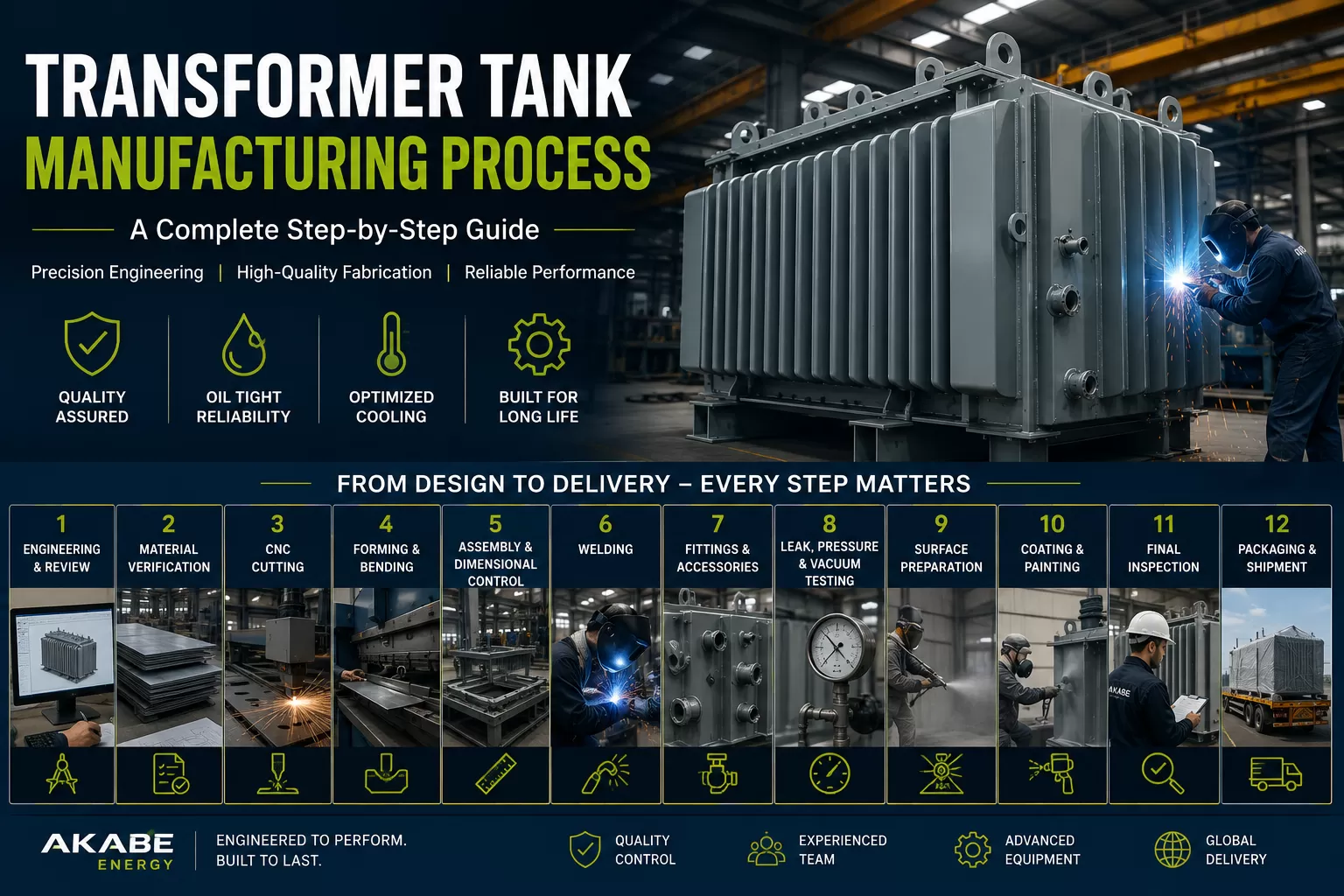
Transformer Tank Manufacturing Process
Transformer tank manufacturing consists of several controlled engineering, fabrication, surface-treatment, and inspection stages.
1. Engineering Design
The process begins with detailed mechanical design using CAD and engineering software. Structural calculations are used to evaluate strength, pressure resistance, dimensions, and manufacturing requirements.
2. Steel Plate Cutting
Steel plates are cut using CNC laser or plasma cutting systems to achieve accurate dimensions and consistent component geometry.
3. Forming and Bending
Cut steel components are shaped using CNC press brakes according to the approved production drawings.
4. Welding
Certified welders or automated welding systems assemble the tank using qualified welding procedures. Weld quality is essential for structural integrity and leak-free operation.
5. Leak Testing
Transformer tanks undergo pressure or leak testing to verify oil-tightness before the coating process.
6. Surface Preparation
Steel surfaces are prepared using methods such as shot blasting or sandblasting to remove contaminants and provide a suitable surface profile for protective coatings.
7. Protective Coating
Industrial primers and corrosion-resistant paint systems are applied according to environmental conditions and customer requirements.
8. Final Quality Inspection
Final inspections may include:
- Dimensional inspection
- Weld inspection
- Leak testing
- Paint-thickness measurement
- Surface-finish control
- Verification against project specifications
Applications of Transformer Tanks
Transformer tanks are used throughout the electrical power and industrial infrastructure sectors.
Common applications include:
- Power transmission systems
- Electrical substations
- Power distribution networks
- Renewable energy projects
- Solar power plants
- Wind farms
- Industrial manufacturing facilities
- Mining operations
- Oil and gas facilities
- Railway power systems
- Commercial infrastructure
- Utility projects
How to Choose the Right Transformer Tank
Selecting the right transformer tank requires careful evaluation of the transformer design, operating environment, cooling requirements, and project specifications.
Important selection criteria include:
- Transformer rating and dimensions
- Tank design and cooling method
- Installation environment
- Ambient temperature range
- Corrosion risk
- Maintenance strategy
- Expected service life
- Applicable technical standards
- Transportation and lifting requirements
- Customer-specific specifications
Working with an experienced transformer tank manufacturer helps ensure that technical, operational, and project requirements are properly addressed.
Benefits of High-Quality Transformer Tanks
High-quality transformer tanks provide long-term operational, safety, and financial advantages.
- Extended transformer service life
- Improved operational reliability
- Effective cooling performance
- Reduced maintenance requirements
- Improved corrosion resistance
- Lower risk of oil leakage
- Enhanced electrical safety
- Improved environmental protection
- Lower total cost of ownership
Conclusion
Transformer tanks are far more than simple steel enclosures. They are essential engineering components that protect internal transformer parts, contain insulating oil, support heat dissipation, and ensure reliable operation under demanding conditions.
Whether used in utility substations, industrial facilities, renewable energy projects, or power generation plants, a properly designed and manufactured transformer tank contributes significantly to transformer reliability, safety, and operational efficiency.
Frequently Asked Questions About Transformer Tanks
What are transformer tanks?
Transformer tanks are steel enclosures that house and protect the core, windings, insulating oil, and auxiliary components of power and distribution transformers.
What materials are used to manufacture transformer tanks?
Most transformer tanks are manufactured from carbon steel. Depending on the application and operating environment, low-alloy steel, stainless steel, galvanized steel, or corrosion-resistant coated steel may also be used.
Why are transformer tanks important?
They provide mechanical protection, contain insulating oil, support heat dissipation, prevent contamination, and contribute to transformer safety and service life.
What are the main types of transformer tanks?
The most common types are hermetically sealed transformer tanks, conservator transformer tanks, and corrugated transformer tanks.
How long can a transformer tank last?
Service life depends on material quality, design, coating performance, operating conditions, and maintenance. Properly manufactured and maintained transformer tanks may remain in service for several decades.
What should be considered when selecting a transformer tank?
Transformer rating, cooling requirements, installation conditions, corrosion exposure, pressure and vacuum requirements, transportation loads, maintenance strategy, and applicable standards should all be considered.